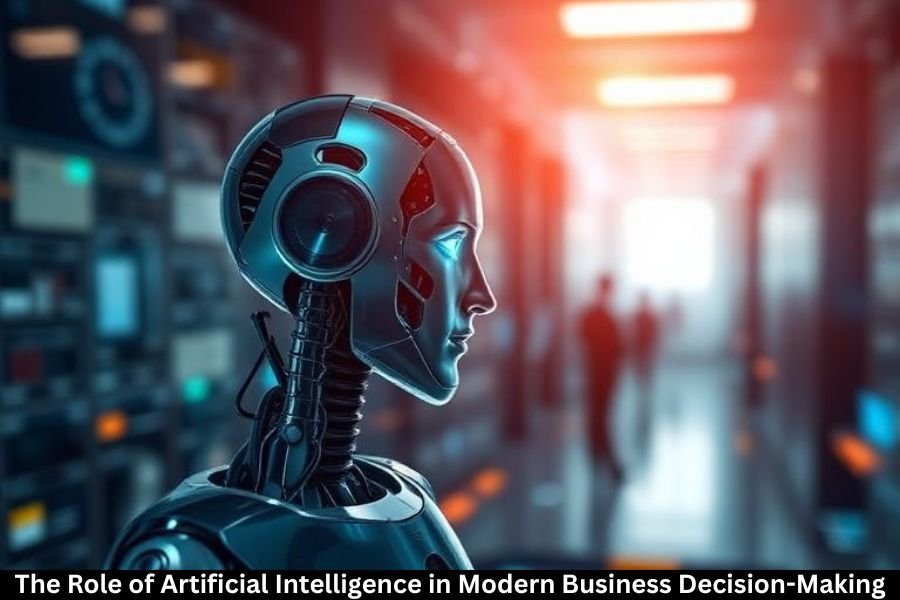
Artificial Intelligence (AI) has quietly become the brain behind many modern business decisions. From predicting customer behavior to optimizing supply chains, AI is transforming how leaders think, plan, and act.
What Is Artificial Intelligence?
Artificial Intelligence refers to computer systems designed to perform tasks that typically require human intelligence. These include learning from data, recognizing patterns, understanding language, and making predictions.
Why AI Matters in Today’s Business World
In a world flooded with data, human decision-makers can only process so much. AI steps in to analyze massive datasets quickly and accurately, helping businesses make smarter decisions at speed.
The Evolution of Decision-Making in Businesses
Traditional Decision-Making Methods
In the past, decisions were often based on experience, intuition, and limited data. While this worked, it also left room for errors, bias, and missed opportunities.
The Shift Toward Data-Driven Decisions
Today, businesses rely heavily on data. AI takes this a step further by not just analyzing data but learning from it, uncovering insights humans might overlook.
Key Technologies Powering AI in Business
Machine Learning
Machine learning allows systems to learn from data and improve over time without explicit programming. It’s the engine behind recommendations, predictions, and automation.
Natural Language Processing (NLP)
NLP enables machines to understand and interpret human language. It powers chatbots, sentiment analysis, and voice assistants used in customer service and market research.
Predictive Analytics
Predictive analytics uses historical data to forecast future outcomes.
Forecasting Trends
Businesses can anticipate customer demand, market shifts, and sales trends with greater accuracy.
Risk Assessment
AI helps identify potential risks before they become costly problems.
How AI Enhances Business Decision-Making
Faster and More Accurate Decisions
AI processes information in seconds, allowing leaders to respond quickly to changes and opportunities.
Reducing Human Bias
By relying on data rather than emotion, AI helps minimize unconscious bias in decision-making.
Real-Time Insights
AI-powered dashboards provide up-to-date insights, enabling proactive rather than reactive decisions.
AI in Strategic Planning
Market Analysis and Competitive Intelligence
AI scans market data, competitor activity, and consumer behavior to support informed strategic planning.
Scenario Planning and Simulations
Businesses can test different strategies virtually, reducing uncertainty and improving outcomes.
AI in Operational Decision-Making
Supply Chain Optimization
AI improves inventory management, demand forecasting, and logistics efficiency.
Process Automation and Efficiency
Routine decisions and workflows are automated, freeing employees to focus on higher-value tasks.
AI in Financial Decision-Making
Budgeting and Forecasting
AI analyzes spending patterns and revenue data to create more accurate financial forecasts.
Fraud Detection and Risk Management
Machine learning models detect unusual patterns that may indicate fraud or financial risk.
AI in Marketing and Sales Decisions
Customer Segmentation
AI identifies customer groups based on behavior, preferences, and demographics.
Personalized Marketing Campaigns
Personalization boosts engagement by delivering the right message at the right time.
Sales Forecasting
AI predicts sales performance, helping teams plan targets and resources more effectively.
AI in Human Resource Management
Talent Acquisition and Recruitment
AI screens resumes, matches candidates to roles, and reduces time-to-hire.
Employee Performance Analysis
Data-driven insights help managers support employee growth and productivity.
Benefits of AI-Driven Decision-Making
Improved Accuracy and Consistency
AI delivers consistent decisions based on data, reducing errors.
Cost Savings and Efficiency
Automation lowers operational costs and improves resource allocation.
Competitive Advantage
Companies using AI gain insights faster, helping them stay ahead of competitors.
Challenges of Implementing AI in Decision-Making
Data Quality and Availability
AI is only as good as the data it uses. Poor data leads to poor decisions.
Ethical and Bias Concerns
If not carefully designed, AI systems can inherit biases from data.
High Implementation Costs
Initial setup, infrastructure, and training can be expensive for some businesses.
Building Trust in AI Decisions
Transparency and Explainable AI
Businesses must understand how AI reaches decisions to trust and improve them.
Human-AI Collaboration
AI should support—not replace—human judgment. The best decisions come from collaboration.
AI Governance and Compliance
Data Privacy and Security
Protecting sensitive data is critical when deploying AI systems.
Regulatory Considerations
Businesses must comply with evolving laws governing AI use and data protection.
The Future of AI in Business Decision-Making
Emerging Trends in AI
Generative AI, autonomous systems, and advanced analytics will further reshape decision-making.
AI as a Strategic Business Partner
AI will increasingly act as a trusted advisor, guiding long-term business strategy.
Conclusion
Artificial Intelligence is redefining how businesses make decisions. By turning data into actionable insights, AI empowers leaders to act faster, smarter, and with greater confidence. While challenges exist, businesses that adopt AI responsibly and strategically will unlock powerful advantages in an increasingly competitive world.
FAQs
1. How does AI improve business decision-making?
AI analyzes large datasets quickly, identifies patterns, and provides accurate insights to support better decisions.
2. Can small businesses benefit from AI decision-making tools?
Yes. Many affordable AI tools are designed specifically for small and mid-sized businesses.
3. Does AI replace human decision-makers?
No. AI supports human judgment by providing insights, not replacing leadership.
4. What are the risks of using AI in decision-making?
Poor data quality, bias, and lack of transparency are key risks if not managed properly.
5. What is the future of AI in business decisions?
AI will become more integrated, acting as a strategic partner across all business functions.